
Call us now :08071793011
 Send Inquiry
 Send Inquiry
Acid Violet Dyes
Price 01 INR/ Kilograms
MOQ : 100 Kilograms
Acid Violet Dyes Specification
- Melting Point
- Approx. 270C (decomposes)
- Strength
- High tinctorial strength
- Boiling point
- Not applicable (decomposes before boiling)
- Size
- Microfine Powder
- Purity
- 99% (approx.)
- Application
- Wool, Silk, Nylon, Leather, Paper
- HS Code
- 3204
- Density
- 1.1 Gram per cubic centimeter(g/cm3)
- Other Names
- Acid Violet, Acid Purple 17, Acid Violet 49, Acid Violet 90 (depending on type)
- Shelf Life
- 2 Years in sealed packaging
- Solvent Color
- Violet in water
- Resistance
- Good light and washing fastness
- Grade
- Industrial Grade
- Shape
- Fine Powder
- Smell
- Odorless
- Water Resistance
- Good (suitable for aqueous dye baths)
- Moisture (%)
- <1%
- Ph Level
- Acidic (pH ~4-6) in aqueous solution
- Molecular Formula
- Varies (e.g., C25H19N2NaO5S for Acid Violet 49)
- Poisonous
- Non-poisonous (Handle with usual care as chemicals)
- Solubility
- Soluble in water
- Taste
- Odorless
- Structural Formula
- Varies by dye variant
- Rubbing Resistance
- Moderate to Good
- CAS No
- None (Acid Violet Dyes are typically mixtures, not single compounds)
- Type
- Acid Dyes
- Usage
- Textile Dyeing
- EINECS No
- Not assigned (mixture)
- Physical Form
- Powder
Acid Violet Dyes Trade Information
- Minimum Order Quantity
- 100 Kilograms
- Payment Terms
- Cash Against Delivery (CAD), Cash on Delivery (COD), Letter of Credit (L/C), Telegraphic Transfer (T/T), Delivery Point (DP), Days after Acceptance (DA), Cash in Advance (CID), Cheque, Cash Advance (CA)
- Supply Ability
- 10000 Kilograms Per Day
- Delivery Time
- 1-2 Days
- Sample Available
- Yes
- Main Domestic Market
- All India
About Acid Violet Dyes
| On Cotton | C.I. Product Name | Product Name |
| Acid Violet 1 | Violet RLX | |
| Acid Violet 12 | Carmine 4B | |
| Acid Violet 90 | Bordeaux MB | |
| Acid Violet 92 | Violet RLX | |
| Acid Violet 131 | Leather Violet R | |
| Acid Violet 49 | Acid Violet 4BS |
High-Performance Dyeing for Textiles
Acid Violet Dyes are formulated to deliver outstanding brightness and tinctorial strength, especially on protein fibers such as wool and silk. Their microfine powder form ensures uniform dispersion in aqueous dye baths, resulting in consistent, vivid coloration during textile processing. With a purity of approximately 99%, these dyes provide reliable results in industrial dyeing operations.
Eco-Friendly and Safe to Use
Committed to safety and eco-responsibility, these dyes are non-toxic under standard conditions and comply with REACH and OEKO-TEX regulations upon request. Their non-poisonous nature, coupled with odorless handling and low insoluble matter, makes them a favorable choice for manufacturers seeking sustainable and safe dyeing solutions.
Reliable Packaging and Storage
Offered in 25 kg and 50 kg bags or drums, Acid Violet Dyes are securely packaged for industrial shipping and storage. To preserve their quality and effectiveness, storing them in a cool, dry environment is advised. With a shelf life of two years in sealed packaging, they reliably meet the demands of large-scale textile production.
FAQs of Acid Violet Dyes:
Q: How should Acid Violet Dyes be stored for optimal shelf life?
A: For best preservation, Acid Violet Dyes should be kept in sealed packaging and stored in a cool, dry place. This ensures the dye retains its performance and extends its shelf life to up to two years.Q: What are the primary applications of Acid Violet Dyes in industry?
A: These dyes are commonly used in textile dyeing processes for wool, silk, nylon, leather, and paper. Their bright violet shade and high staining power make them ideal for achieving vibrant and consistent color results.Q: When is the ideal temperature and pH range for using Acid Violet Dyes?
A: Optimal dyeing results occur at application temperatures between 4090C and a pH level of 4.55.5, depending on the substrate. Maintaining these conditions helps maximize dye uptake and colorfastness.Q: Where are Acid Violet Dyes manufactured and supplied from?
A: Acid Violet Dyes are exported, manufactured, and supplied from India, meeting international standards for industrial and eco-friendly textile dyeing.Q: What benefit do Acid Violet Dyes offer in terms of eco-friendliness and safety?
A: They are non-toxic and compliant with REACH and OEKO-TEX standards upon request, ensuring environmental safety and human health during application when handled according to standard chemical procedures.Q: How do Acid Violet Dyes perform in terms of washing and light fastness?
A: These dyes demonstrate good light and washing fastness, providing durable color on fabrics that withstand routine laundering and exposure to light.Q: What manufacturing process is used to produce Acid Violet Dyes?
A: Acid Violet Dyes are produced through advanced sulphonation and diazotization methods, which create their distinctive color properties and high purity, tailored for industrial-grade textile applications.
Tell us about your requirement

Price:
Quantity
Select Unit
- 50
- 100
- 200
- 250
- 500
- 1000+
Additional detail
Mobile number
Email

More Products in Acid Dyes Category
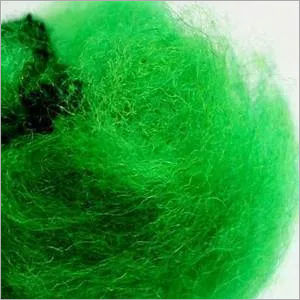
Acid Green Dyes
Minimum Order Quantity : 100 Kilograms
Usage : Paper Dyestuffs
Molecular Formula : C27H25N2NaO7S2
Ph Level : 5.07.0 (1% solution)
Moisture (%) : 0.5% max

Acid Brown Dyes
Price 01 INR / Kilograms
Minimum Order Quantity : 100 Kilograms
Usage : Other, Textile dyeing, coloring leather, paper, and indicators
Molecular Formula : Variable (example: C18H14N2Na2O8S2 for Acid Brown 75)
Ph Level : 4.06.0 (1% solution)
Moisture (%) : <2%

Acid Yellow Dyes
Price 01 INR / Kilograms
Minimum Order Quantity : 01 Kilograms
Usage : Other, Textile, Paper, Leather, Cosmetic, and Ink Industries
Molecular Formula : C16H11N2NaO4S (example for Acid Yellow 36)
Ph Level : 46 (acidic)
Moisture (%) : <1.0%
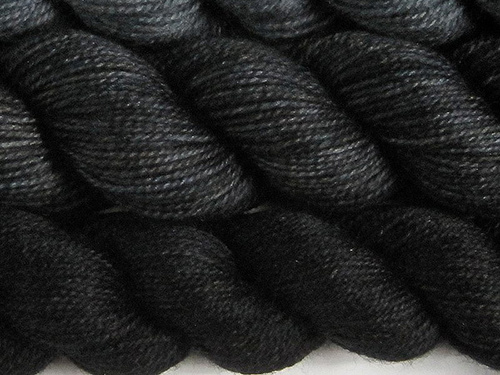
Acid Black Dyes
Price 01 INR / Kilograms
Minimum Order Quantity : 100 Kilograms
Usage : Other, Textile Dyeing
Molecular Formula : C28H21N5Na2O6S2
Ph Level : 45 (1% Solution)
Moisture (%) : 1.0%

We Mainly Deal in International Market
 Send Inquiry
Plot No. 58/3, 12/13, Shyam Industrial Estate, Phase-1, Near Kiran Industries, G.I.D.C., Vatva, Ahmedabad - 382445, Gujarat, India

 Send Inquiry
 Send SMS
Developed and Managed by Infocom Network Private Limited.
